Digital Workplace Redesign
Project Name
Digital Workspace
Headquarters
RVO
Industry
Public Sector
Company Size
4000+ employees
Timeline
6 Months
Understand
RVO wanted to strengthen alignment and engage across the organization. At the same time, the existing intranet caused daily frustration.
Employees struggled with poor search results, unclear ownership and incomplete profile pages. Information was difficult to find and hard to trust. The intranet functioned mainly as a publishing platform, while the organization needed a digital workplace that actively supported collaboration, clarity and connection to strategy.
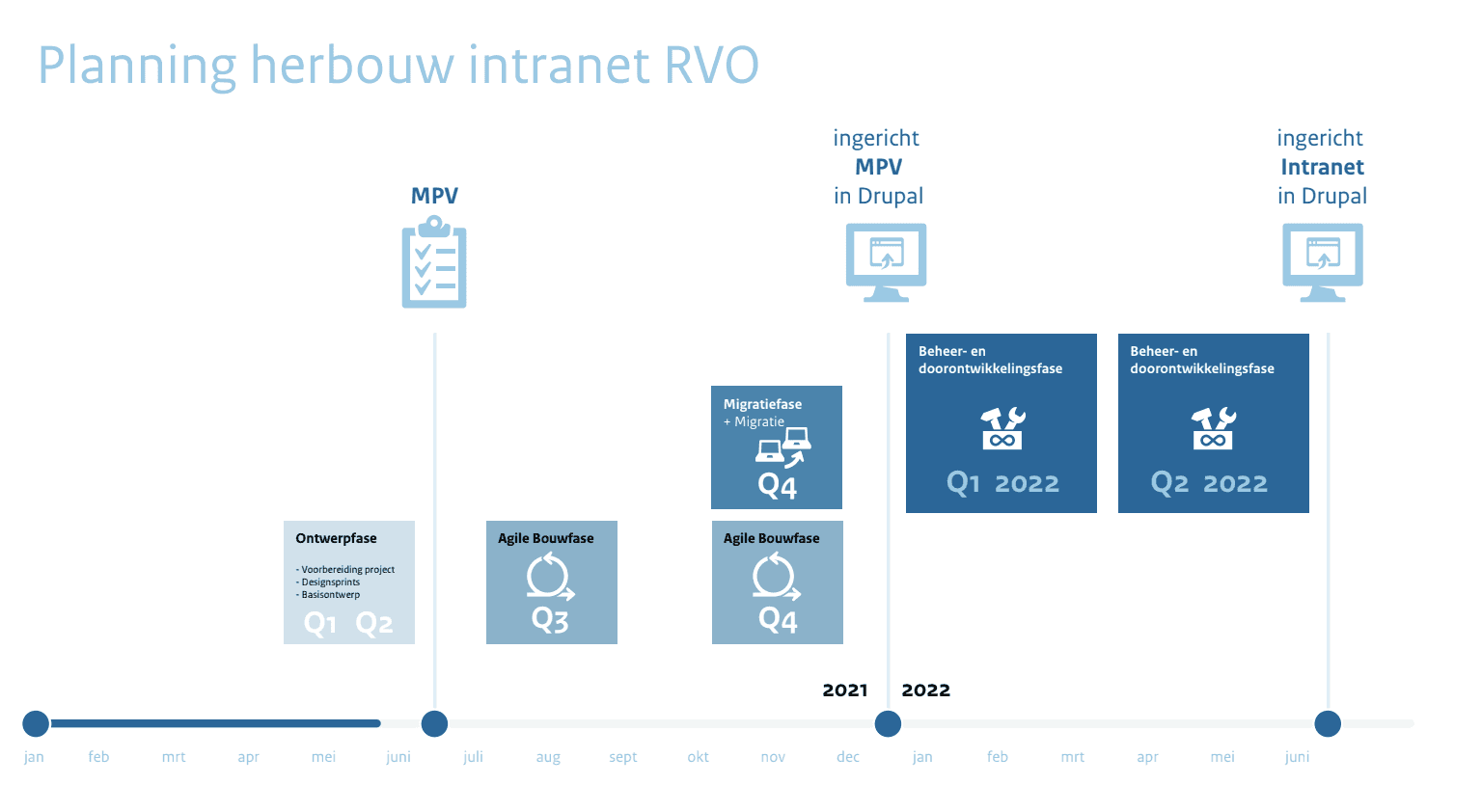
High-level roadmap for the redesign
Observe
We collected insights across the organization to understand how the intranet was used in day-to-day work and where it failed employees.
We used a mix of quantitative and qualitative input:
Stakeholder interviews to map goals, constraints and dependencies.
On-site whiteboard sessions at multiple locations to capture real examples, workarounds and recurring irritations.
An open online idea box to gather suggestions from all employees.
An ananymous employee satisfaction survey to validate patterns and capture sentiment at scale.
Define
This led to the following design question:
"How might we design a digital workspace that helps employees translate strategy into daily action, collaborate transparently across departments and feel shared ownership of organizational goals?"
Ideate
Through collaborative brainstorming sessions with employees, we explored which functionalities would genuinely support their daily work. Employees shared frustrations and proposed improvements and together we sketched how these ideas could take shape.
The following priorities emerged:
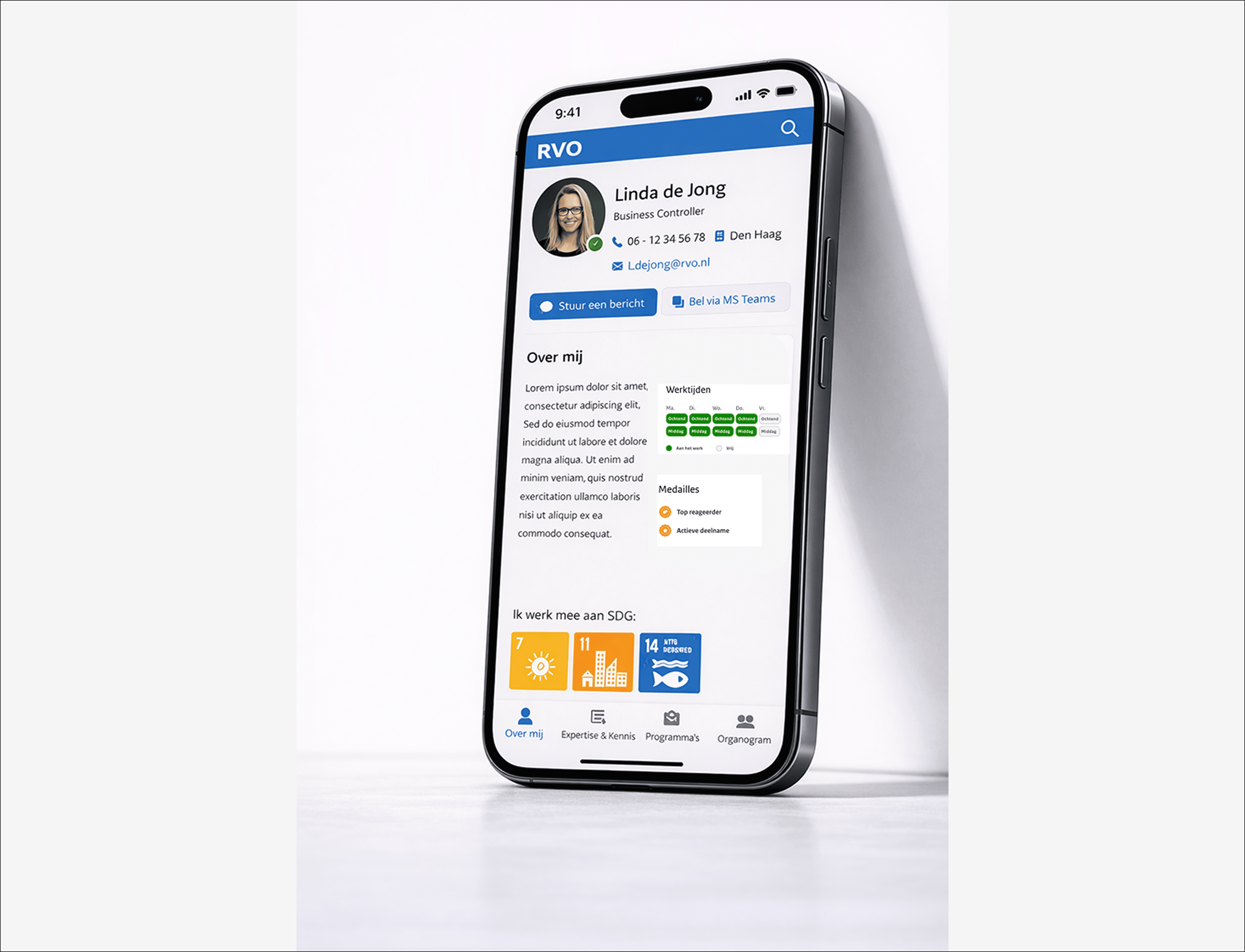
Enhanced employee profiles: including visible presence days
Clear replacement indication: showing who to contact when a colleague is absent
Improved search functionality: to increase speed and reliability of information retrieval
Personalized homepage content: tailored to role and relevance
Prototype
The prioritized ideas were translated into functional requirements and concrete design proposals in collaboration with IT and the intranet vendor. To ensure rapid delivery and early creation, we defined a Minimum Viable Product (MVP). This allowed us to focus on the most impactful improvements first, while planning more advanced features for later phases.
Features included:
Enhanced employee profiles with visible presence days
Clear replacement indication during absence
Improved search functionality
Personalized homepage components
Clear content ownership structures
Low-fidelity sketches and structured requirement documents were used to clarify how these features would function in practice and to align expectations between employees, IT and supplier before development started.
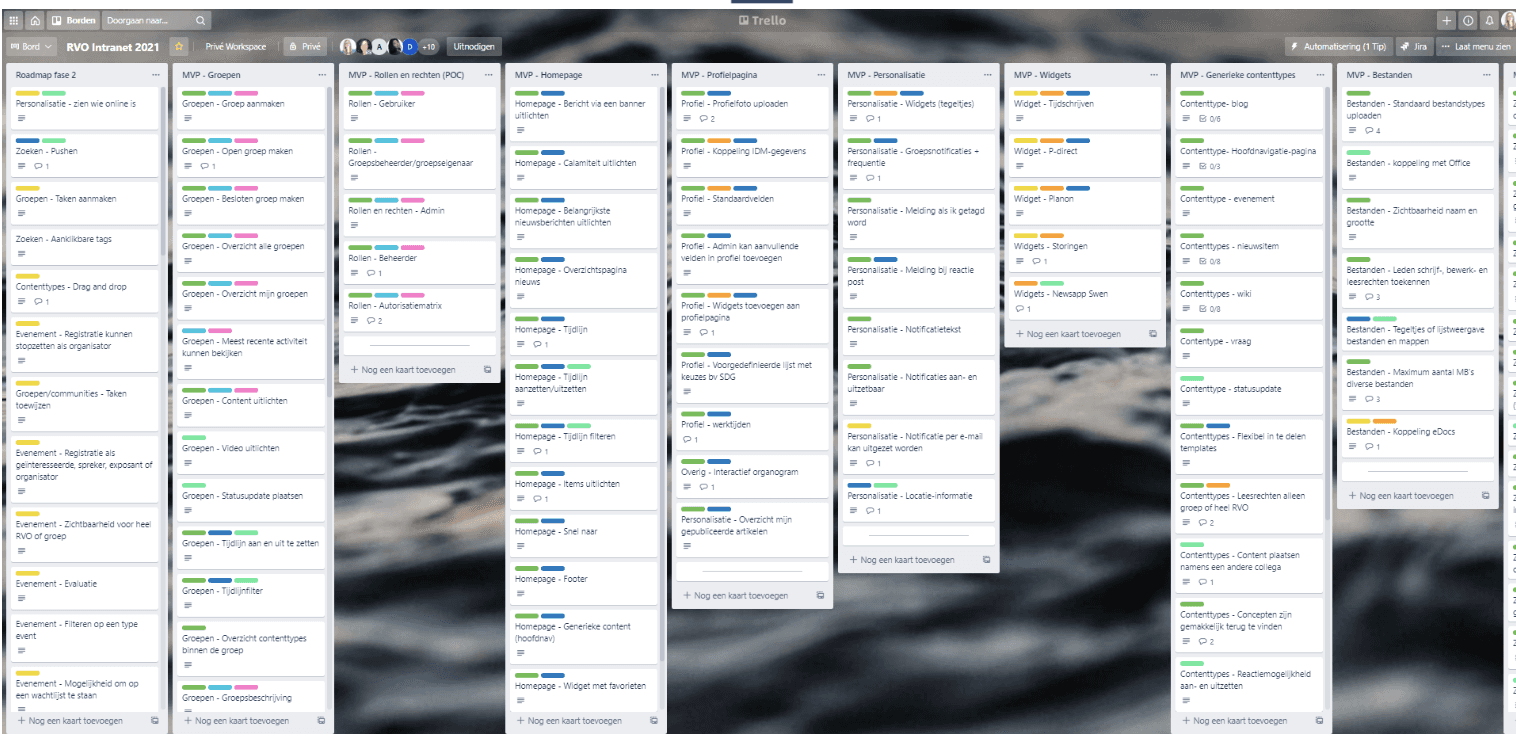
Backlog of the new intranet project in Trello
Test
Tested was embedded in the agile way of working. At the end of each sprint, results were presented during sprint reviews where stakeholders could provide feedback. This iterative validation ensured continuous alignment between strategy, user needs and technical implementation.
Reflect
This project taught me that a digital workplace is organisational infrastructure, not just a communication channel. It also confronted me with my own hesitation to involve large groups of employees, fearing complexity and competing demands. I learned that involvement is not a threat to clarity, but a prerequisite for adoption. People embrace change when they recognize their own frustration s and ideas in the solution.
My role
I led employee research and facilitated co-creation sessions
I acted as the Product Owner
I translated strategic objectives into functional requirements
I aligned stakeholders across departments, IT and vendor