Service & Vision Strategy
Project Name
Service Vision & Strategy for Digital Services
Headquarters
Midden-Groningen
Industry
Public Sector
Company Size
1000+ employees
Timeline
6 Months
Understand
A municipality was facing growing dissatisfaction among its residents. The mayor noticed it first: more and more people were walking into his office, frustrated and feeling unheard. Something had shifted between what the municipality thought it was delivering and what residents were actually experiencing.
Rather than responding with policy adjustments, the question became more fundamental: how do you rebuild the connection between a public institution and the people it serves? As an online advisor, I was brought in to explore that gap and to translate what residents were actually experiencing into a direction for meaningful change.
Observe
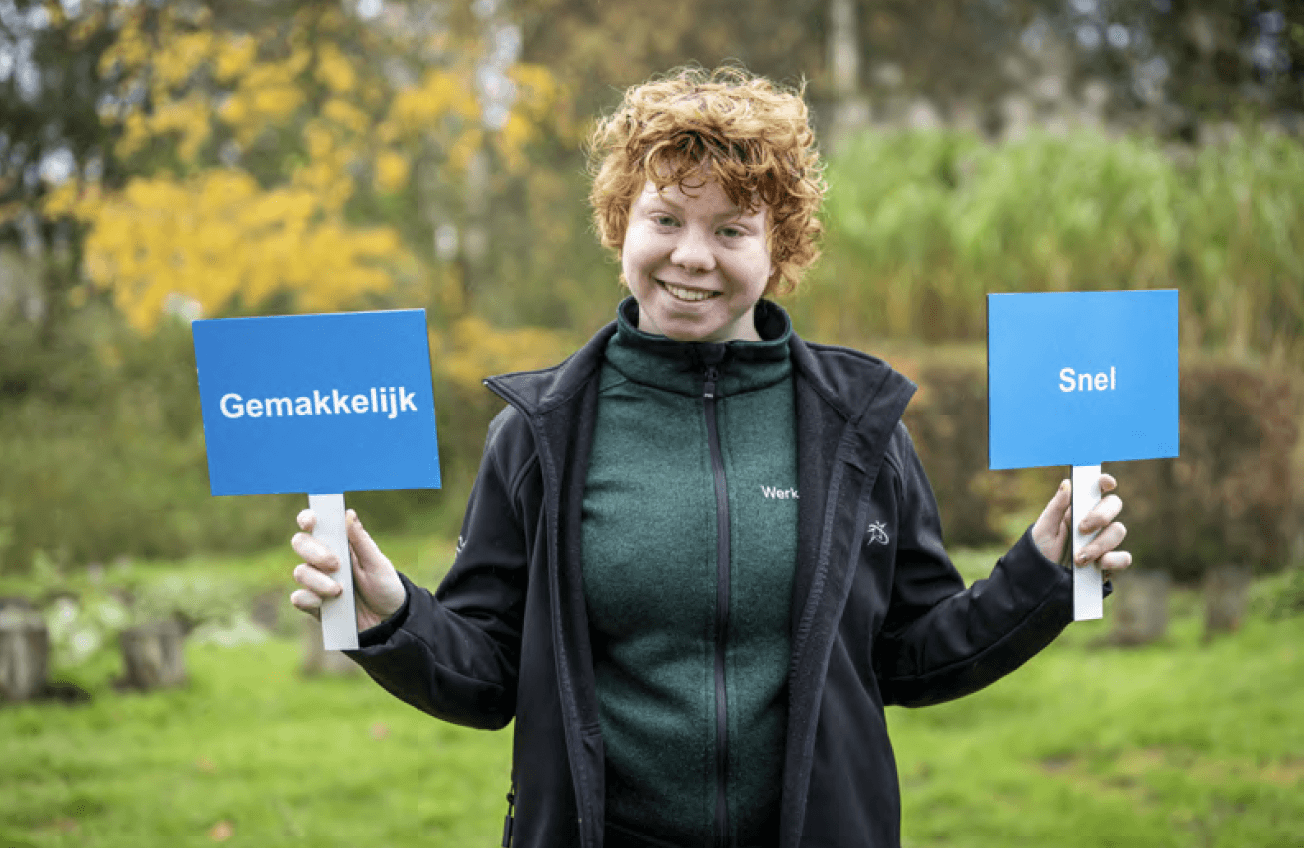
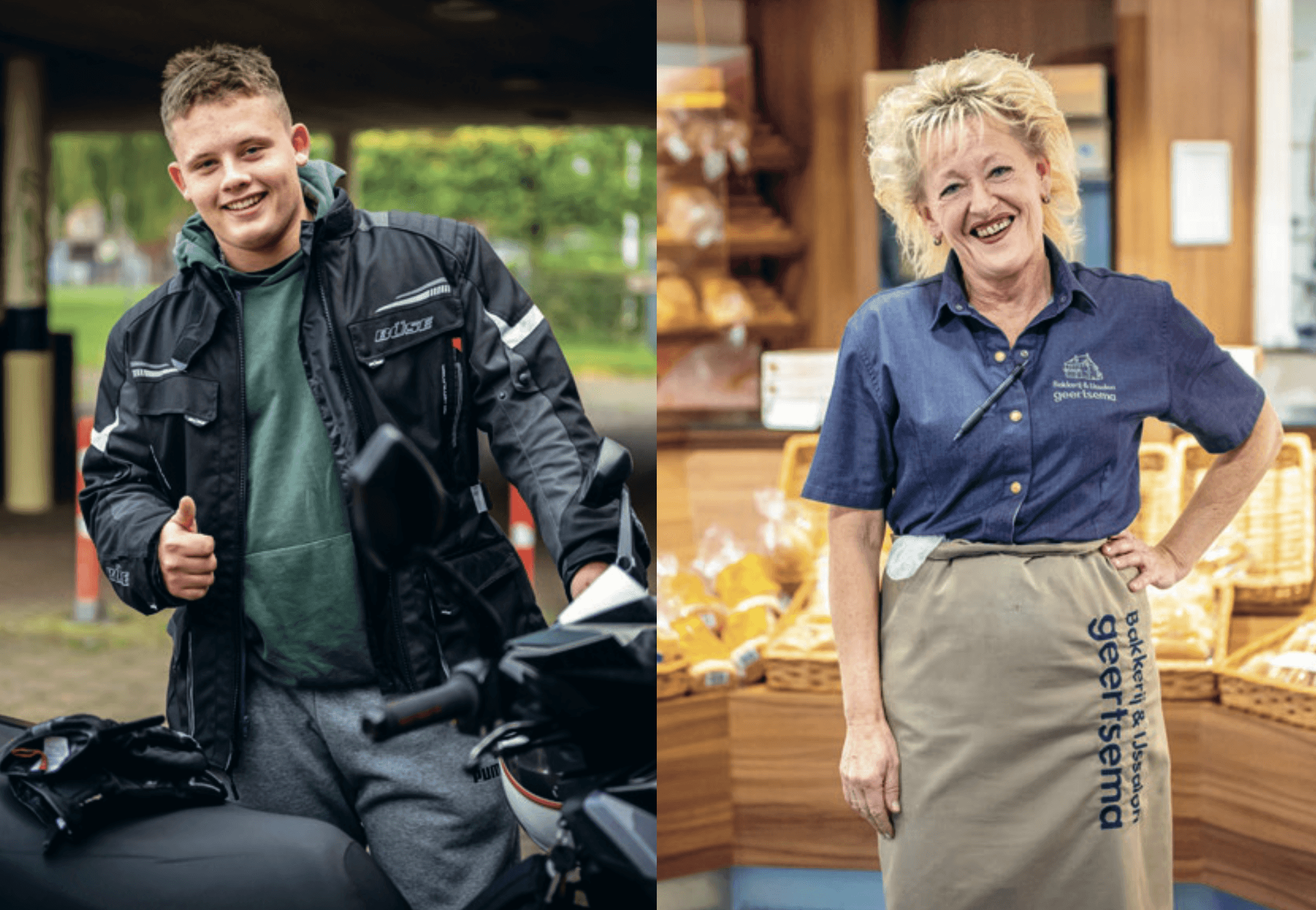
Over the course of two days, we conducted field research across the municipality. We interviewed 25 residents about their everyday experiences with municipal services, listening not for satisfaction scores but for lived reality. A photographer joined us to capture portraits and context, grounding the research in the faces and stories behind the data.
The conversations were in-depth and unhurried. Residents shared frustrations, but also moments where things had worked well. What emerged was not a list of complaints, but a layered picture of what it actually feels like to need something from your local government and not know where to turn.
Define
To answer the question "How might we design municipal services that truly reflect the lived experiences and needs of residents?", we facilitated a series of co-creation sessions with employees, managers and directors.
The room itself became part of the design process. Along the walls, portraits of the interviewed residents were displayed, accompanied by their quotes. Their voices were literally present in the space, anchoring every conversation in real human experience rather than abstract policy.
Using these stories as design material, participants reflected on what good service truly means from a resident's perspective. The conversations moved beyond operational improvements towards questions of attitude, coherence and responsibility. Together, we formulated a shared mission statement. Not as a policy document, but as a collective commitment grounded in the lives of the people the municipality exists to serve.
Ideate
With a shared mission established, the next step was to translate ambition into realistic action. In collaborative workshops with IT, service professionals and management, we explored what the mission would actually require in practice.
Idea generation focused on three areas: improving digital services, strengthening cross-channel coherence and clarifying responsibilities across departments. Using dot voting, participants collectively prioritised the most promising initiatives.
Each proposal was then assessed against three criteria: urgency, organisational and technical feasibility, and financial impact. This kept the process grounded and ensured that ambition was matched by what was actually achievable.
Prototype
The prototype took the form of a structured service vision and implementation framework. Rather than a static document, it was designed as a living foundation for change: something that could guide decisions, align stakeholders and be built upon over time.
It included a mission statement and guiding principles, a multi-year roadmap covering 2024 to 2028, development priorities aligned with urgency and feasibility, and a block-based training programme to support the organisation in putting the vision into practice.
One of the most concrete directions to emerge from the strategy was the concept of proactive service delivery. Rather than expecting residents and entrepreneurs to find and apply for subsidies or provisions themselves, the municipality commits to reaching out first. As the strategy states: "We want to avoid that you have to figure out yourself what you are entitled to." Through Mijn Midden-Groningen, a personal digital environment, residents receive tips and notifications tailored to their situation. The strategy also explicitly commits to exploring how AI can be used to improve service delivery, making this proactive approach scalable and personalised over time.
This shifts the relationship between citizen and government: from reactive to proactive, from bureaucratic to human.
Test
The service vision and roadmap were presented to the executive board and municipal leadership for validation and approval. This phase tested the robustness and credibility of the strategic direction within the political and administrative context.
Three questions guided the evaluation: whether the vision was realistic within current financial and organisational constraints, whether it aligned with political priorities, and whether there was sufficient ownership across departments.
The mission statement, roadmap and implementation framework were formally approved by the mayor and executive directors, and subsequently shared with the municipal council.
Reflect
Interviewing residents made me realise how quickly policy discussions can drift away from everyday reality. Their stories brought nuance and urgency into the room and shifted the dynamic: alignment did not emerge from hierarchy, but from shared understanding.
What stayed with me as a designer is the power of making people present. Not as personas or data points, but as faces on a wall and voices in a conversation. That shift changed what was possible in the room.
It remains one of the most meaningful projects I have worked on. I am proud of the shared vision and direction we were able to build together.
My role
I led qualitative field research and conducted in-depth interviews with 25 residents across the municipality.
I designed and facilitated co-creation sessions across organisational levels, from frontline service professionals to directors.
I co-developed a multi-year roadmap in collaboration with IT and key stakeholders, and orchestrated alignment across organisational and political levels to bring the vision to formal approval.